How Personalized Tutoring Platforms Are Actually Built
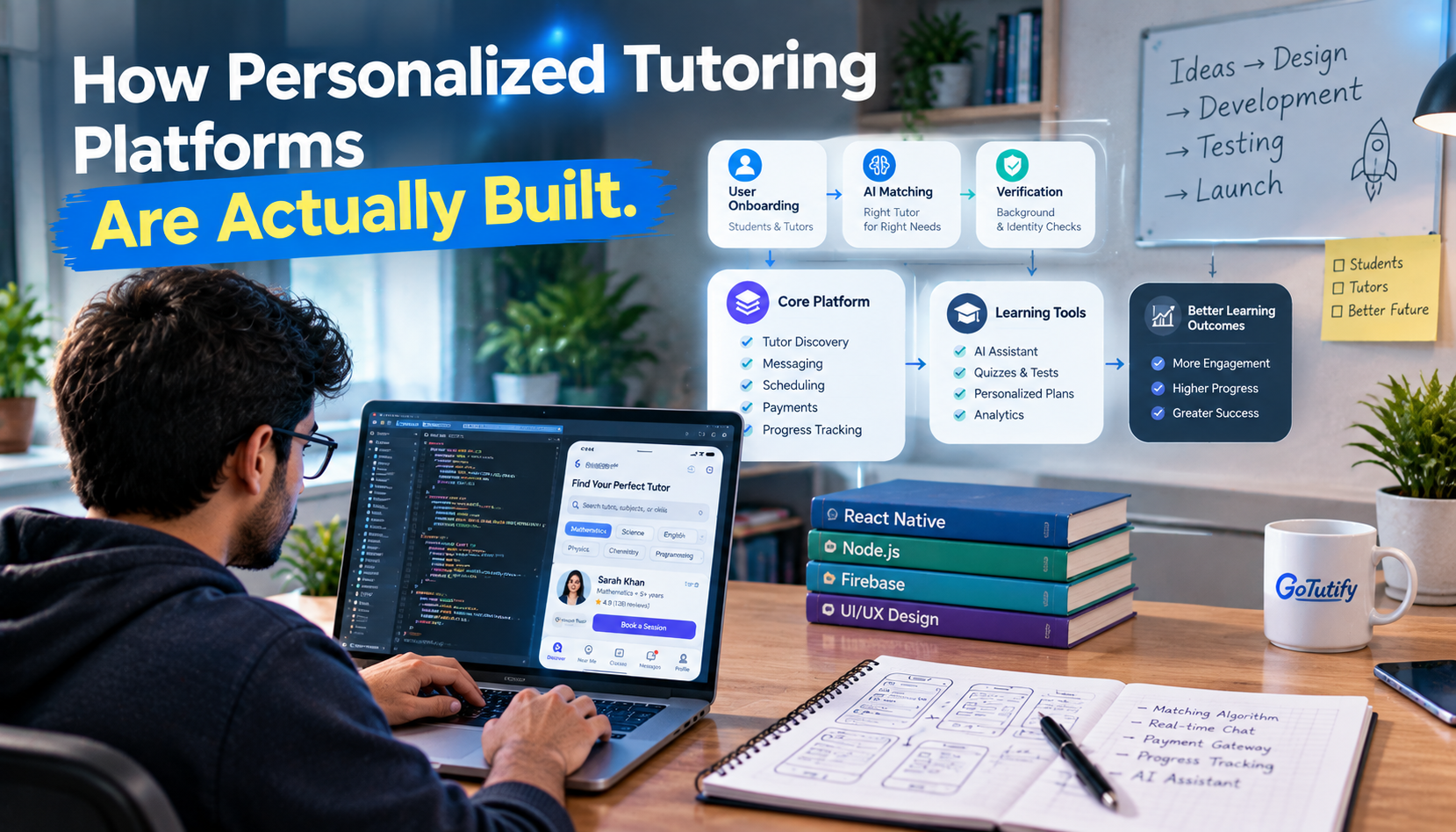
Matching a student to the right tutor sounds simple. Under the hood, it is a real engineering problem, with matching logic, live infrastructure, and a lot of edge cases most people never think about.
Every personalized tutoring platform makes the same promise. Match the right student to the right tutor, at the right time, and fix it when things aren't working. That promise is easy to say and hard to actually build. Here is a look at the real engineering problems behind it.
Matching Is Harder Than It Looks
A simple first version of tutor matching just filters by subject and availability. That works fine for a demo. It breaks fast in real use.
Real matching has to think about a lot of things at once: subject, grade level, learning speed, teaching style, time zones, language, and a tutor's past ratings. Treating this like a simple filter misses the real problem. It is closer to solving a puzzle with many rules than just looking something up in a list.
● Must-match rules: subject, language, and free time overlap
● Nice-to-have rules: teaching style fit, pace, past session ratings
● Changing rules: how busy a tutor is, response speed, cancel history
Most platforms start with simple rules, then add a scoring system once there is enough real data to know which things actually predict a good match, and which ones just sound important but do not really matter.
Why Live Sessions Are Their Own Challenge
Live tutoring needs smooth video, a shared whiteboard or document, and chat, all staying in sync. Often over slow or unstable home internet on both sides.
The tricky part is not video itself. Tools like WebRTC already handle most of that. The harder part is what happens when things go wrong. If a student's internet slows down, does the whiteboard freeze? Does sound matter more than video? Does the session reconnect without losing what was on screen? Getting this wrong does not just annoy people. It breaks the one thing the product is supposed to give: real, uninterrupted help.
Personal Learning Needs Real Feedback, Not Just a Smart Model
A lot of edtech products talk a lot about "AI-powered personalization." But the real requirement is simpler, and just as hard: a tight loop between what a student struggles with, what a tutor does about it, and whether it actually worked.
This usually means tracking more than just "session finished." It means tracking which exact idea a student got stuck on, how many tries a problem took, and whether a tutor had to explain it a different way. Without that level of detail, any "personalization" on top is really just guessing with extra steps.
Privacy Is Not a Checkbox Here. It Is Core to the Design.
Tutoring platforms handle information about children, which changes everything compared to a normal app. This affects real design choices, not just a privacy policy page nobody reads.
● Session recordings need strict, trackable access, not just simple permission levels
● Tutor background checks need more care than normal staff records
● Data should not just be stored forever by default. There needs to be a real reason and a real limit
Teams building in this space usually design for rules like COPPA or GDPR-K from day one. Adding privacy protection later, after the product is already built, is far more expensive than planning for it from the start.
Where Most of These Platforms Actually Go Wrong
The most common mistake is not bad matching logic or bad video quality. It is treating the tutor's own tools as an afterthought. A tutor with no easy way to prep for a session, no view of a student's past struggles, and no simple way to leave notes for next time ends up starting from zero every single session. That quietly ruins the whole point of "personalized" learning.
This is one area where the platform's design matters just as much as the matching system itself. At GoTutify, the tools tutors actually use and each student's session history are treated as just as important as the main app, not an afterthought, because that is exactly where real personalization either happens or quietly falls apart.
The Takeaway
Building a personalized tutoring platform is not really just an AI problem or a video-calling problem. It is a systems problem. Matching logic that works past simple filters. Session tools that handle bad internet gracefully instead of breaking.
A feedback loop tight enough to make personalization real, not just a marketing word. And a data setup that takes protecting children's information seriously from the very first design decision.
Get any one of these wrong, and the product still technically works. It just quietly stops doing the one thing it promised.